May 23rd, 2012

The U Agency is the One That Stole My Stuff (Updated)

This post was substantially edited on May 25, 2012.

A lawyer “blog” stole a post of mine wholesale, regarding medical malpractice tort reform in Texas being a bust. I ran the story on May 23rd. This is a copy of my post that they used: LawGroup 5.23.12

The marketing company responsible has now come forward and owned up to the deed.

This is the explanation of John Uniac of The U Agency, which has a Massachusettes telephone number:

I wanted to reach out to you regarding a post that seems to have come from your blog. I apologize as the team is instructed to reach out to the original content producer to see if they would like it posted and then linked back to them as well as full credit given.

Two lessons learned: One is for lawyers that when they outsource their marketing their reputations go along with it. The other is for the marketeers that are busy writing/stealing “content” to post on law firm websites. Here’s a thought, let the lawyers write their own pieces. There is simply no way that some marketing agency is going to create quality legal content.

The U Agency, ironically, doesn’t seem to have its own website. While the graphic you now see in the upper right hand corner says www.theuagency.com, there is no actual website at that address. Go figure. But he does have a Linked-In profile that says, in part, about the company:

We help you get social but we make sure you get it right!

Well, he didn’t get it right. I don’t know if the “team” he refers to is an actual group of people in a real office, or if this is some team in Bangalore for whom this is just another “create content” project.

Finally, while you can still see the lawyer’s name in pdfs, it is gone from this post for the purpose of Google searching. I even took it out of the URL (hope no one linked to it, otherwise it will be a dead page).

I took the name out to uphold my part of the bargain that I wrote about: If the law firm coughed up the name of their black hat marketers, for me to publish here, I would edit this post to remove their name. Done.

The idea for letting the lawyer off the hook if they cough up the name of the marketeer engaging in slimy conduct, by the way, comes from Popehat. See: Too Seldom Is The Question Asked: Who Are Be Defensing Our Criminals? and also:   It’s Time To Ask: Have We Adequately Investigated The Link Between Attorney Comment Spam And Masturbation-Aid Devices?

2nd Update, 5/27/12: See the comments regarding concerns the marketer has also fouled up by using the kosher mark (a hechsher) of the Orthodox Union.  That O(U) is the most widely recognized mark of kosher foods in the country.


May 21st, 2012

Beer, Indians, Boycotts and Supply Chain Liability

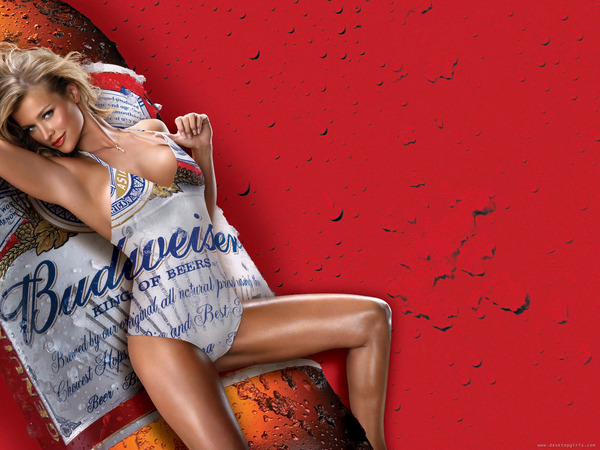
Budweiser ad, 2007

Question for the day: If a beer company sells its brew to a distributor, who in turns sells it in massive quantities to a tiny village next to a dry Indian reservation, can there be liability within the supply chain for the extraordinary alcoholism and neurologically impaired children that are born from the alcoholics?

This issue raises its head thanks to NYT columnist Nicholas Kristof, who called last week for a boycott of all Anheuser-Busch products. There is a recently filed lawsuit in Nebraska by the Oglala Sioux on the subject, though his call for the boycott rests on grounds of immorality rather than illegality. Kristof frames the issue this way:

The human toll is evident here in Whiteclay [Nebraska]: men and women staggering on the street, or passed out, whispers of girls traded for alcohol. The town has a population of about 10 people, but it sells more than four million cans of beer and malt liquor annually — because it is the main channel through which alcohol illegally enters the Pine Ridge Indian Reservation [South Dakota] a few steps away.

Pine Ridge, one of America’s largest Indian reservations, bans alcohol. The Oglala Sioux who live there struggle to keep alcohol out, going so far as to arrest people for possession of a can of beer. But the tribe has no jurisdiction over Whiteclay because it is just outside the reservation boundary.

Before going further, read his column and then return.

Welcome back. That column was met with a furious retort by Walter Olson (senior fellow at the libertarian oriented Cato Institute and founder  of Overlawyered) in a column at Reason, ripping Kristof for being “insufferably moralistic,” among other things. He summarizes the lawsuit, making headlines in Nebraska and South Dakota, thusly:

Kristof asks readers to join his boycott of the leading brewer for (he says) improperly permitting its output to be sold in large volumes in tiny Whiteclay, Neb., just across the state line from the Oglala Sioux’s Pine Ridge Reservation in South Dakota. Though notionally dry, the reservation is in practice wracked with alcoholism.

Olson thinks it’s ludicrous to hold the manufacturer responsible for what the distributor is doing with the product once it’s out of their hands. He writes:

Those familiar with state beer regulation will recognize what’s going on here. Most states—specifically those with the “three-tier” system—carefully cultivate the profitability of the licensed beer wholesaling business by limiting the legal rights of brewers (as well as retailers and end-consumers) to work around them. If Nebraska is typical, that would make it unlawful for the brewers to arm-twist the wholesalers through economic threats into curtailing supplies to the Whiteclay border sellers.

Now, read  his column and return, because I’m about to add my two rupees to the debate. I’ll wait for you to come back.

OK, now it’s my turn.

While the issue seems novel, it really isn’t. Rare, yes, but there is precedent for trying to hold manufacturers liable for distributors engaging in nefarious conduct. This can happen with guns, pharmaceuticals, alcohol, fireworks, and most any other product that is both highly regulated and subject to differences in state laws (that create incentives to run product across jurisdictional lines). It isn’t just retailers that need to be careful —  for issues such as dram shop liability where a bartender serves an obviously intoxicated person  who then gets behind the wheel of a car and kills someone — but potentially others in the supply chain such as distributors and manufacturers.

Because there are so many different possible factual scenarios here, I’m only going to write generally about how such a suit might be successful, as its actual success would be highly dependent on the facts of the particular case. I could, after all, fill a page with caveats, qualifiers and disclaimers regarding the interplay of Nebraska, South Dakota and tribal laws, none of which I have particular knowledge of. So I write generally.

As a foundation to any suit, there would need to be some type of illegal or dangerous conduct, such as smuggling or dealing with counterfeit product. This type of conduct generates secondary markets, and if  the volume of product is high — be it guns, booze or other — there is a pretty good reason to suspect the manufacturers will know what is going on as they are likely turning profits based on the illegal conduct.

Generally speaking if there is intervening criminal conduct it would sever the issue of liability, setting the manufacturers and distributors free from potential liability. Trying to blame the gun maker (or brewer) for the acts of the criminal, after all, is certainly a tough task, particularly if the product has left the hands of the manufacturer free of any defect and remains free of defect.  But what if the manufacturer knew about the downstream criminal activity and was turning a blind eye to the conduct while it scooped up the profits of increased sales? Will a duty to act arise if the manufacturer  is able to control the actions of others within that supply chain?

That issue was raised years ago here in New York’s high court in a gun case, Hamilton v. Berretta. In Hamilton, relatives of people killed by gun violence in New York sued sued 49 handgun manufacturers in Federal court alleging, amongst other things, negligent marketing, ultra-hazardous activity and fraud. It was, in some sense, not that much different in concept from suing the beer companies here. The product left the manufacturers’ hands and was used, all too well, for its intended purpose.

In Hamilton, many of those gun manufacturers were found liable in a civil trial in federal court. The defendants obviously asked for dismissal, and the then-novel issue was appealed to the Second Circuit Court of Appeals. Unsure of how New York state courts would rule, the federal appeals court certified these two questions to New York’s top state court for a ruling — and I think you will see similarity to the beer case that Kristof and Olson discuss:

(1) Whether the defendants owed plaintiffs a duty to exercise reasonable care in the marketing and distribution of the handguns they manufacture?

(2) Whether liability in this case may be apportioned on a market share basis, and if so, how?

While the court answered both questions in the negative for that case, saying the the manufacturers were not shown to have any duty of care to those shot, the court didn’t rule out the possibility that, in the right circumstances, such a case could be brought. The court wrote:

Certainly too, a manufacturer may be held liable for complicity in dangerous or illegal activity (see, e.g.,Suchomajcz v Hummel Chem. Co., 524 F2d 19 [3d Cir 1975] [manufacturer sold chemicals to retailer with knowledge that retailer intended to use them in making and selling illegal firecracker assembly kits]).

Both sides in this beer case, and similar cases, will find a full exploration of the issues of duty, causation and liability in the Hamilton decision. While Hamilton was ultimately lost, it was lost on the difficult facts of that case. The court wrote:

This case challenges us to rethink traditional notions of duty, liability and causation. Tort law is ever changing; it is a reflection of the complexity and vitality of daily life. Although plaintiffs have presented us with a novel theory—negligent marketing of a potentially lethal yet legal product, based upon the acts not of one manufacturer, but of an industry—we are unconvinced that, on the record before us, the duty plaintiffs wish to impose is either reasonable or circumscribed. Nor does the market share theory of liability accurately measure defendants’ conduct. Whether, in a different case, a duty may arise remains a question for the future.

In the beer case, Olson raises the issue of a statutory inability by the beer manufactures to control the distributors. But what, exactly, will “control” mean? If, for example, a manufacturer becomes aware that illegal smuggling is going on, are they without recourse in terminating the relationship? Is a manufacturer supposed to ignore illegality, and thus become complicit in bootlegging?

I’m not going to say such a case is easy, and the facts of any one particular case may mean it isn’t even viable. But under the right factual scenario of a manufacturer turning a blind eye to illegal activity so that  it can increase its profits, it may not only be possible, but righteous. If the beer plaintiffs can articulate a sound cause of action and survive a motion to dismiss, discovery could expose manufacturers and distributors knowingly facilitating a significant bootlegging operation that would be scandalous if true. That alone, of course, won’t get them to the end zone of proving their case, but could greatly assist in the first step of any personal injury matter: proving that one person owed a duty of care to another.

Kristof, to his credit, didn’t rely on the lawsuit to initiate his boycott of Anheuser-Busch beers (writing, “I don’t know how the lawsuit will go…”). Instead, he is attempting to shame the company into improving the situation by curtailing massive beer sales into the reservation border area. This is, conceptually, similar to something I’ve done in the past in my itty bitty spot on the web, calling lawyers on the carpet for dubious marketing practices that might be on the acceptable line of the code of professional responsibility, but still smells bad.

Final thoughts: The lawsuit and the boycott will be interesting to watch, both from a lawyer’s perspective to see how a manufacturer or distributor might be held liable for a product that was criminally smuggled after it left their hands, quite possibly with their knowledge, and with how the company will react to the boycott, if at all. I’m hopeful that both Kristof and Olson will continue to write from their respective perches.

 

May 17th, 2012

Rakofsky Moves to Amend His Defamation Case (Updated x2)

Joseph Rakofsky, as seen on a copy of his website, which has since been taken down.

Joseph Rakofsky, who last year sued the Internet for defamation and then amended his suit to add more parties, is now asking the court for permission to amend his suit again.

The proposed Second Amended Complaint weighs in at a staggering 268 pages, with 1,223  separately numbered paragraphs. No, I haven’t read it, but I see that it does contain a brand new tort he calls Internet mobbing, which I understand is a claim that prohibits use of the Internet for criticism and revokes the First Amendment. Feel free to wander amidst the legalese and let me know what these papers actually claim.

I will get to it, of course, since I am one of the defendants and also local counsel to 35 defendants. Marc Randazza is lead counsel for our group.

The motion to amend is made because, in New York, you only get to amend a complaint once as of right, which right he already used up just days after starting the suit. After that judicial permission is needed, or else a plaintiff could be constantly moving the goal posts making the case impossible to defend to conclusion.

Mr. Rakofsky also asks for additional relief in the form of amending the caption to correct the name of the lead defendant, the Washington Post, which had originally reported the story of Mr. Rakofsky’s troubles defending a murder trial in Washington D.C. and the judge’s highly uncharitable comments about his representation. The same judge added more just weeks ago when Rakofsky’s former client was sentenced to 10 years after a plea, and called the defense “clueless” and “motivated by self-interest,” according to Jamison Koehler who practices in that neck of the woods.

Other requested relief is to delete eight defendants from the caption because they settled with Rakofsky, including St. Thomas School of Law. And he seeks a default judgment against seven defendants who didn’t bother to answer the complaint at all, presumably because they are out of state and not subject to jurisdiction in New York.

Previously he had moved to add Yahoo! Google and Tech Dirt, but that relief is not mentioned in the Notice of Motion. The current attempt to amend the amended complaint is actually shorter this time than last.

There are numerous motions pending to dismiss. These papers do not address any of those motions.

Documents:

Cross-Motion and Affidavits (total, three pages)

2nd Amend Complaint pt 1 (part 1, 118 pages)

2nd Amend Complaint pt 2 (part 2, 151 pages)

Update (6/8/12):

My Affidavit in Opposition: ET-OppAffFinal

Our Memo of Law in Opposition: Rakofsky Opp to SAC -Final

Update (6/26/12):

Rakofsky’s Reply Memo of Law:ReplyOnMotionToAmend


May 16th, 2012

Protecting the Client’s HIV, Drug and Mental Health Medical Records

There’s a nice decision out of the Appellate Division (First Department) this week that pertains to putting the breaks on litigation disclosure in personal injury cases that is, all too often, out of control in breaching privacy protections. In particular, it deals with HIV records as well as drug/alchohol records and mental health records.

This type of stuff can show up in a medical chart for even a routine car accident as doctors and nurses take histories and social workers plumb the depths of a patient’s worries and concerns. But.  Just because a defendant is entitled to “full disclosure of all matter material and necessary in the prosecution or defense of an action” does that mean they can get these highly privileged (and potentially quite prejudicial) documents?

Enter, stage right, the decision a few days ago in Del Terzo v. Hospital for Special Surgery. The appellate bench explores the conflicting interests of the patient’s desire for privacy and the defendant’s desire to go fishing around the records for anything that might help it.

And the winner here is the patient, thanks to the special protections of New York’s Public Health Law as well as the Mental Hygiene Law. Both have provisions that specifically protect the patients from such nosiness.

With respect to HIV, the defendant must show, according to the Public Health Law,  “a compelling need for disclosure of the information for the adjudication of a criminal or civil proceeding.” While that would seem to come into conflict with the “full disclosure of all matter material and necessary” to defend the action, the PHV has supremacy because of these magic words: “Notwithstanding any other provision of law, no court shall issue an order for the disclosure of confidential HIV related information, except . . . in accordance with the provisions of this section.”  And the court added for good measure, recognizing that these demands had nothing to do with this particular claim:

Nor have defendants even suggested, on the basis of the medical records provided, that there is any history of HIV or AIDS. Indeed, defendants seem to be engaged in a fishing expedition.

Turning to the drug and mental health requests, the court was no less helpful to the defendant, pointing out that mental health information shall not be released except “upon a finding by the court that the interests of justice significantly outweigh the need for confidentiality.” The defendant got hammered again by the court, when it wrote:

The interests of justice standard…has not been met in this case where defendants seek the disclosure of confidential records on the basis of nothing more than a generalized assertion that substance abuse and mental illness can affect a person’s level of stress, ability to work and life expectancy.

This is a good case to keep in the breast pocket when those defense demands come pouring. Or  for those times a hospital demands that people waive all their disclosure rights or it won’t furnish records in response to an authorization requesting records. Those records need to be redacted.

A final note: This is the type of objection that should be raised for all such requests, regardless of whether such records even exist. Because if an objection is made only on a selective basis, it tips the hand as to what the records might hold.


May 11th, 2012

Travolta Sex Cases and Anonymity

Even if you don’t follow salacious Hollywood news, it’s hard to miss the stories coming out of John Travolta being sued for sexually harrassing masseuses. A couple have already sued him, under cover of anonymity.

We’ve seen this story play out before: A John or Jane Doe brings a case in federal court on some sensitive subject and asks to be anonymous. But just asking for anonymity is not the same as keeping it.

I hit this story the first time in 2006 when a woman sued in a New York federal court over a sexual assault. She wanted to stay anonymous. The court wouldn’t have it.

It came up again recently with an actress sued IMDb for violating her privacy by using her credit card to glean her date of birth — a sensitive issue in Hollywood due to age discrimination for women over 40 — and used the information to make edits to her online acting profile. Amazon owns IMDb, and she claimed that this is where the info came from. I predicted she would not keep that anonymity. And, in fact, she lost that fight and re-filed under her real name.

So now we come to the John Travolta accusers. If they are bringing suit in federal court within the 9th Circuit (see the complaint), which encompasses California, I think these people will also lose in their bid to stay anonymous. And it will be for the same reasons I set forth in the IMDb case:

In this circuit, we allow parties to use pseudonyms in the “unusual case” when nondisclosure of the party’s identity “is necessary … to protect a person from harassment, injury, ridicule or personal embarrassment.”

“a party may preserve his or her anonymity in judicial proceedings in special circumstances when the party’s need for anonymity outweighs  prejudice to the opposing party and  the public’s interest in knowing the party’s identity.” Does I Thru XXIII v. Advanced Textile Corp., 214 F.3d 1058, 1068 (9th Cir.2000).

So, if the accusers come out of the woodwork with claims, they had best be strong enough to withstand the media maelstrom if they are bringing those actions in federal court.