December 24th, 2012

Twelve Miles To Newtown

The fire truck that led us into Newtown turned on its speakers. And out came a mournful rendition of Amazing Grace on the bagpipes. I stood this past Saturday with 120 other runners, and headed into town. We were a mile or two away, and we ran slowly toward its center.

We had gathered on the edge of town after running from Roxbury, 12 miles or so from Newtown, to pay our respects, to donate money, and then leave without overstaying our welcome.

While we had the support of local officials for our fundraiser, and the Roxbury fire department had escorted us the whole way, lights blazing, we still didn’t know what to expect in a town overwhelmed with grief, memorials, and visitors. Many, many visitors.

Where is the line between honoring the memories of innocent lives and showing support, and the uncomfortable feeling that some may view outsiders as participating in a morbid sort of tourism? That line, of course, is unknown, as it resides in the ever-shifting sands of emotion within each of us. That which is acceptable and welcome to one may be unacceptable and unwelcome to another.

The run — not a race — was organized by Brian Vanderheiden, a local runner living just eight miles away. He gathered friends in the area, centered around a vibrant running community in Roxbury, and then invited others from the outside to join him. On short notice in a grief-stricken week, he and a supporting crew put this together.

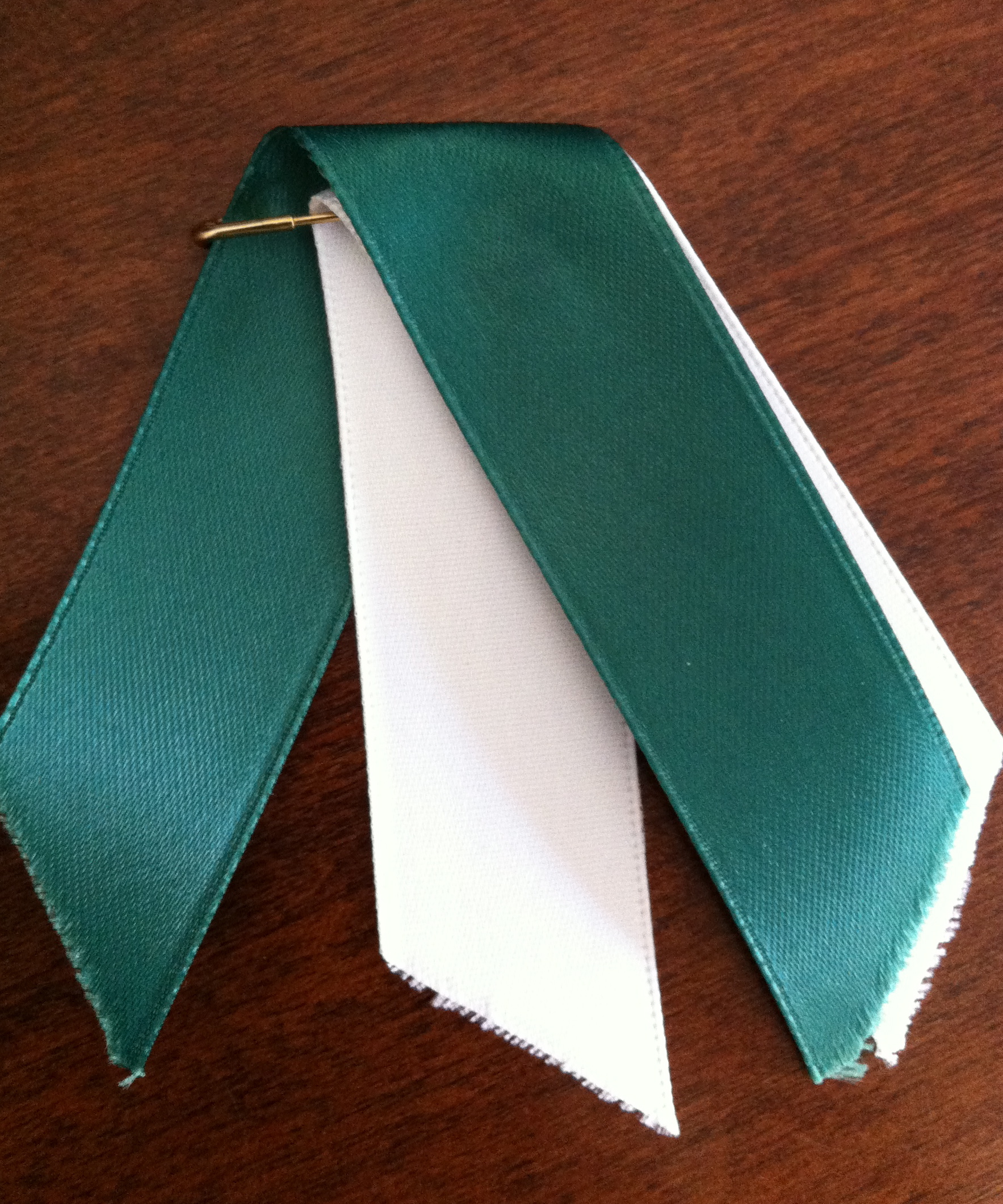
It was cold and cloudy when we left the park that was our staging area, with an ever-so-light sprinkling of fresh snow giving a bucolic covering to the farms and fields on rolling hills that we ran past. We chatted as we went, green and white ribbons flapping in the wind, all the while wondering and worrying about what awaited us.

Losing innocent adults to a hail of gunfire is awful enough, but what is the right thing when a child is lost? What is there to say to the family? To do? On NPR, Linton Weeks discusses that very subject, knowing from tragic experience, having lost two sons in 2009 to an out-of-control  tractor-trailer that crashed into their stopped car. He has much to say, even if there might be little to say for the friends, neighbors and others trying to provide support.

As 120 runners approached town in unison, pulling hats from heads and choking up, a few on the sidewalks gave a gentle applause of acknowledgment. Homeowners on nearby porches gave a thumb’s up. A couple of drivers going the other way on our road stopped to say thanks.

The town was filled to the gills with makeshift memorials that would crack the soul of any that breathe. There may easily be a thousand or more stuffed animals within them, along with all manner of flowers, candles, Christmas trees, stockings, personal notes and letters and more. A giant broken heart sits by the firehouse inscribed with the names of those lost. A group of leather-clad bikers walked by, among those paying respects for an incomprehensible tragedy.

One person in our runner’s group wrote on Facebook about the reaction she had received:

At the finish a friend and I were approached by three teenage girls who thanked us for what we did today.

I don’t know what we did, but they were in tears.

Life doesn’t always present us with clear choices on which road to take, as the potential choices may defy empirical analysis. We cannot always appreciate how others will view our actions. We go sometimes with our gut, and we hope for the best.


 

December 21st, 2012

Twittering With the Enemy (A Blogospheric Celebration)

Yesterday I re-tweeted something that Ted Frank wrote over at Point of Law; a piece about lawyers whining about no work. His point — after noting that he started up a successful public interest law firm dedicated to objecting to class actions that don’t treat the plaintiffs well — was that there were many good causes out there for lawyers to get involved with. Get off your ass, he effectively said, and go find a cause to represent.

The main point that I took, before he addressed a myriad of potential legal issues, was how much he enjoyed what he was doing as opposed to the career track toward academia he had anticipated. He wrote that he

discovered how much I like litigation when I have autonomy and don’t have to make arguments I don’t believe in, and discarded the idea of writing law-review articles no one would read. Today I have two attorneys working for me, a fascinating docket, and get to argue more appellate cases every six months than I did in my entire ten-year BigLaw career.

Frank’s political views, of course, are not universally shared, particularly by members of the plaintiff’s personal injury bar. But he did address, as I said, a number of issues that could be raised by lawyers looking for new career tracks.

There are three different reactions that I’ve seen, though I think the last one might be the most important…stick with me here, because this time I have an actual point to make.

The first reaction to the Frank piece came  from Max Kennerly (First Lesson For New Plaintiff’s Lawyers: If It Was Easy, Everyone Would Be Doing It). Kennerly is always a good read, and he gets into the nitty gritty of the details of the clients and lawyers actually meeting each other:

plaintiffs’ law firms don’t just discover viable legal claims somewhere in the world and file them, they only enter the picture after clients find and hire the lawyersMarketing lawyers is hard work.

He goes on to discuss — and I won’t give it all here because I think you should head over to his site and read it yourself — the extraordinary difficulties of the entire contingent fee arrangement and trying to fund mass actions:

Frank is arguing for inexperienced, poorly capitalized lawyers to dive right into expensive and prolonged complex litigation involving procedural mechanisms (e.g., the class action) and causes of action (e.g., antitrust) that are routinely attacked by no less a force than the United States Supreme Court against defendants with essentially unlimited resources, like “Ivy League schools” and “the Obama administration.”

The second objection comes from Elie Mystel over at Above the Law. First he identifies the problem:

the problem is that “the reason” most people went to law school was “money.” The “cause” most people signed up for was “risk-averse earning potential.” Frank is essentially telling a group of mercenaries to find a cause they believe in and fight for free for a time, and then the money will come. And it’d be great advice except for that fact that most mercenaries didn’t get into the business for a cause, they’re in it for the cash.

But from there Mystel digs deeper and points the finger at the law schools that teach legal theory, as opposed to the actual practice of law. Young, unemployed lawyers are simply not up to the task of doing what Frank advocates because they’ve never been taught. He notes:

Not everybody has the skills to start their own business, and it’s not like law school spends a lot of time — or any time whatsoever — teaching and training people in the art of making money with a J.D. Heck, there are hard-working, incredibly intelligent partners at law firms who have no freaking clue how to market themselves or their legal expertise. We call them “service partners,” and they’d probably be working for the hourly rates of an SAT tutor if it weren’t for “rainmakers” with business savvy who know how best to turn talent into money.

Scraping clients together is hard, not everybody knows how to do it, and law schools aren’t teaching people.

And finally, there is a third objection that I didn’t expect, and the one I consider most important. This one comes from “Michael” on Twitter, who was displeased that I (and Dave Waterbury) re-tweeted Frank’s piece to begin with:

@Turkewitz @dewesq55 Really? Sending a link advocating undercutting standard fees on contingency fees = asking for a race to the bottom.

That is correct, I re-tweeted something even though I had disagreements with parts of it and even though Frank has a long history of being a tort “deformer” whose political views I oppose. And you know what? I once hired him as my attorney anyway. I explained that in detail a few years ago: Turkewitz v. Yahoo (Meet My Lawyer, Ted Frank).

Now the point I wanted to make — I told you I would get here: When I was just a baby blogger, some six years ago, I was irritated by some point or article that Walter Olson noted at Overlawyered and wrote a response. And Olson proceeded to give me the best damn lesson in blogging that I ever received: He amended his post to say, and for an opposing view, see Turkewitz. WTF?

“The enemy” had just given me link juice and readers. It took just a heartbeat to fully comprehend the nature of the blogosphere. We are not islands unto ourselves, but this is an ongoing conversation. Nor is this a conversation to be had solely among those with whom we agree. What good is that?

Unlike many politicians (and arguing spouses) that simply talk past each other, barely even acknowledging the position of the other, Olson engaged. And with less than a year under my belt, he then added me to his blogroll (which I wrote about).

Frank wrote something that was interesting. People responded. They may agree or disagree with him, but this is what makes for a vibrant blogosphere. Let us celebrate.

Why is this important? Because many still don’t get it, with social media gurus telling clients to fill their blogs with all manner of Google friendly search terms regardless of the dreck it produces. This is a favorite topic of people like Scott Greenfield and Brian Tannebaum.

Look at the four faces you see in this post. That, my friends, is how blogging is supposed to be done. Break out the boxing gloves and debate the merits and to hell with what the social media gurus tell you about how Google thinks. Google, you may be surprised to learn, could be a tad smarter than you think.


December 20th, 2012

Oprah Winfrey, Diane Sawyer and My X-Rays

This is a story of two famous women, and a bunch of x-rays that hang in my office. Both wanted to use them on their shows as examples of surgical equipment that had been left behind. One of the films is to the right, and the others on my web site.

A few years ago I received an email from the Oprah Winfrey show. It seemed that some guy named Dr. Oz wanted to use those x-rays for a show on medical mistakes.

Sure, I said, you can use them, so long as you give me credit so that these don’t disappear into the public domain. Interested parties should know their original source. Thus started the most ludicrous negotiation I’ve ever had in my life on any subject. After a few dozen emails over several weeks, they successfully overlawyered the issue to death and they never saw the light of day on the almighty Oprah show.

I confess that, when I finally wrote As Seen On Oprah! (Kinda, Sorta, Almost) I had a lot of fun. More fun than should be legal, perhaps. It never got much in the way of pageviews, but it’s always been one of my favorites.

So this afternoon I get a call from a producer from Diane Sawyer for ABC News. They also want to use the x-rays for show on medical mistakes.

We consummated a deal in about a minute. You can see the clip here as my films have their 15 nanoseconds of fame and glory.

Two different media divas; two different ways of handling a routine matter.


December 18th, 2012

Overstating the Case and the Sandy Hook Massacre

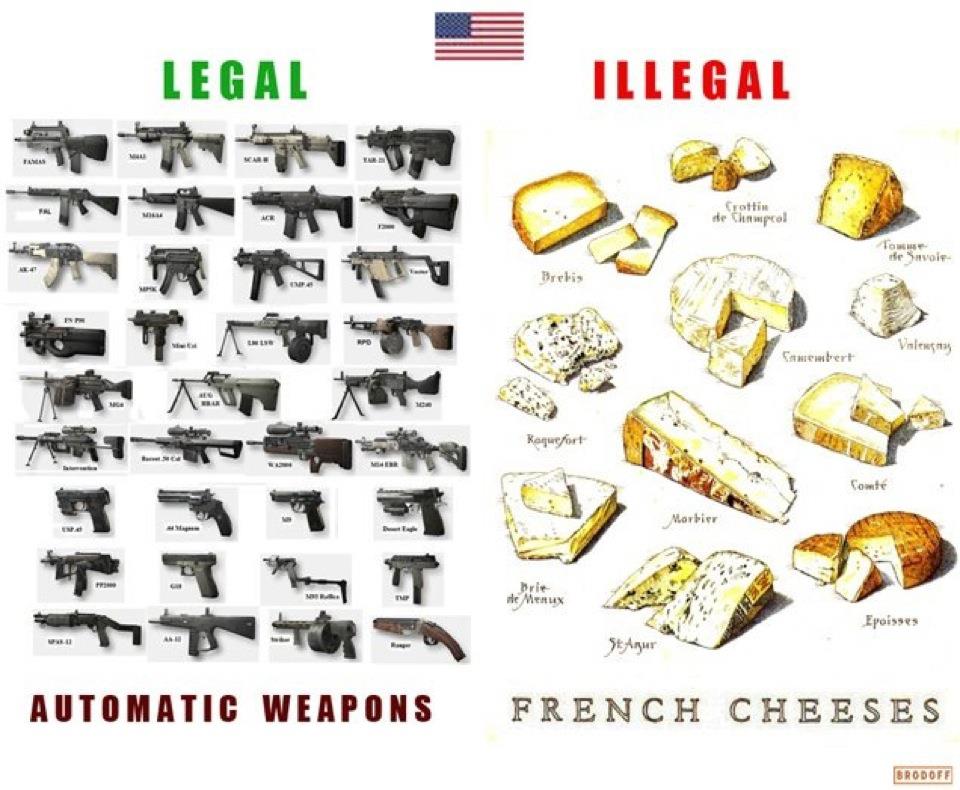
A graphic that shows one way to overstate an argument -- go ahead, try to buy a machine gun and see how far you get.

I’ve had a strong impulse these past few days to add my two cents on the Sandy Hook massacre and the subject of our gun culture that allows easy access to the mentally unstable, criminals, drunks, angry spouses, terrorists and more. Most that have written seem to focus on whether this horror could have been avoided.

Since I’m not a “me too” kind of blogger, I hesitated.

But in reading some of the arguments, one thing jumped out at me that I see through the eyes of someone trained to persuade: Many of those making arguments vastly overstated their case. And when you overstate your case, as any lawyer that’s argued in the well of the courtroom knows, you destroy your credibility with respect to other arguments.

So let’s take two sample arguments related to Sandy Hook and gun control. First, there is the magnificent stupidity of Megen McArdle writing at the Daily Beast. She argues, in the face of clear evidence to the contrary, that there’s little we can do to present a future massacre. Given that no other industrialized nation in the world has as many guns and as many gun deaths, this is clearly false.

In 2008, for example, we had over 12,000 gun deaths while Japan had 11. We obviously can do something; the question is whether we choose to do so. The more regulation we have over firearms and their owners, the more difficult it is for homicides of passion, mental instability, or money to take place.  Fewer guns = fewer gun deaths.

McArdle makes the vapid argument — made by others I might add — that laws won’t stop all gun deaths.  She writes, “it’s unlikely that 100% of potential spree killers would be identified before they picked up a gun.” No kidding.

But that ignores the societal benefits of reducing the number by 25%, by 50%, by 75%. Laws will never stop all crimes, but they can reduce them, and thereby reduce the number of innocent deaths each year.

Here’s a clue to listening to an argument: When someone makes claims for all or nothing positions, they are usually building strawmen to easily knock down. Even if she had a legitimate point to make somewhere, her credibility is shot.

But after going through various excuses on why this massacre couldn’t have been stopped — and ignoring the 10,000+ others each year — she let’s loose with this imbecility, that will likely haunt her for years to come:

I’d also like us to encourage people to gang rush shooters, rather than following their instincts to hide; if we drilled it into young people that the correct thing to do is for everyone to instantly run at the guy with the gun, these sorts of mass shootings would be less deadly, because even a guy with a very powerful weapon can be brought down by 8-12 unarmed bodies piling on him at once.

I find my self continually amazed at those that think the answer to the gun problem is figuring out how to take down the guy after it’s already started, instead of making it difficult for him to get started in the first place.

Now on to the other side. See that graphic on this page, showing the stupidity of laws that make machine guns legal while certain French cheeses are illegal? Dumb, dumb, dumb. Machine guns aren’t the problem because access to them is so highly restricted.

Whoever created it effectively changed the subject away from the point sought to be made. Some machine guns apparently can be possessed, as you can see from this place in Utah,  that advertises you can shoot them on their range:

Many guns are available to rent at Doug’s. If you want to try out a handgun, a 22 rifle or a machine gun we can make it happen. Regular firearms are
$10 for the first gun and $6 per gun thereafter. Machine guns are $20 and include assistance in the range from one of our staff.

But it is pretty clear that they are not widely available because they are severely restricted if not outright outlawed in the state. Good regulations, you see, prevent widespread abuse.  (This is actually a fair argument for the pro-control crowd.)

With 20 small caskets going into the ground along with teachers, gun control advocates don’t need to overstate the case. They only need to set forth the facts — including the vast numbers of annual gun deaths in the U.S. — because the facts are horrible.

If you want to persuade, don’t overstate. Don’t sacrifice your credibility, for if you do, the rest of your arguments won’t be persuasive. They won’t be persuasive because you’ve lost the audience.


December 13th, 2012

Dog Bites Breast; Does Auto Insurance Cover It?

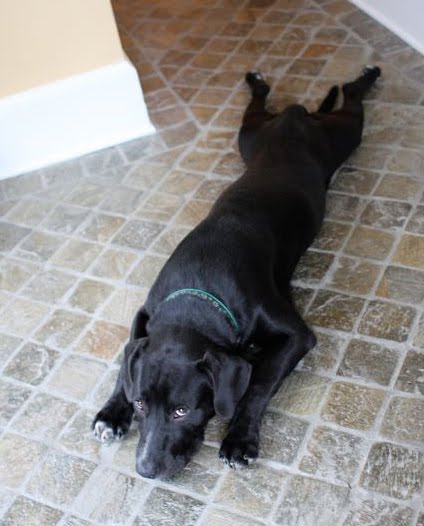
My dog; not the offending one. I needed art. He posed.

I know what you’re thinking; you think I put “bites breast” in the subject heading just to grab your attention. Nah, would I do that?

In fact, a dog inside of a car poked its snout through an open window and did bite the breast of a passing woman. And I presume it hurt quite a bit because there is money up on the table and an interesting judicial decision to go with it.

The issue came to a head this week in Allstate v. Reyes, in Dutchess County.  The car, with the dog inside and the window partly open, was parked in a “No Parking” zone when the woman was bitten.   The owner of the car, through his insurance company, ponied up the $25,000 policy that he had.

But the injuries — not listed in the decision — were obviously pretty substantial as the bitten woman then filed for arbitration against her own insurance company under it under-insured motorist claim provision. This is an endorsement on your policy that comes into play if the car that smashed into you (which is what usually happens) was carrying insufficient insurance for your injuries.

But this wasn’t a car accident, it was a dog bite. Did this injury occur arise out of the ownership, maintenance or use of the under-insured vehicle?

Want to take a guess? I’ll wait…

And the answer is, according to Dutchess County Justice James Pagones, yes. It did arise out of the use of the vehicle. Why? Because:

…the use of a vehicle to transport a household pet is now commonplace and the dog would not have been close enough to bite the respondent’s right breast without the use of [the owner’s] vehicle to haul the dog and [the owner’s] act of permitting the rear window to remain open. It is not necessary that the use of the vehicle be the proximate cause of the respondent’s injuries. Rather, this court finds that the use of the vehicle was a proximate cause of the respondent’s injuries. [emphasis in original]

Justice Pagones made a point of italicizing that the conduct did not have to be the proximate cause, it only needs to be a proximate cause. And that is because an injury might result from multiple caues.

One interesting twist on this case is this: If this was just a dog bite case, the concept of negligence wouldn’t exist. In New York, we have strict liability for animals with a known dangerous propensity. This is part of the infamous concept of “one free bite” — a concept that isn’t 100% accurate — that gives an owner notice of danger. So if there was no additional insurance through the under-insured endorsement, it would be impossible to obtain a judgment against the dog/car owner for simply the dog bite unless you could prove the dog had a nasty history.

Will you ever see this fact pattern again? Hell no. But I appreciate good judicial reasoning in an off-beat case.