December 13th, 2012

Tort “Reformers” Whine (Again) About Trial Lawyer Influence (#Hypocrisy)

In today’s New York Law Journal is another in a never-ending series of stock articles about big business whining about trial lawyer influence in the legislature.

This is the lede:

ALBANY – Bemoaning the clout of trial lawyers on New York government officials, a business-oriented group said yesterday that the lawyers spent nearly $20 million in the last six years to influence public policy.

The Lawsuit Reform Alliance of New York reported that personal injury law firms and individual lawyers made $8.2 million in campaign contributions while the lawyers’ political action committees chipped in another $6.5 million between Jan. 1, 2006, and Nov. 26, 2012. Additionally, the lawyers’ groups spent $6.3 million on lobbying.

Really? How pathetic.

Shall we now tally up the amount spent by massive health care conglomerates? Insurance companies? Real estate and construction companies?

The answer, of course, is yes!

But I don’t have to really write a post about that, because I already did it earlier in March of this year:  Trial Lawyer Lobbying in Albany (A lot or a little?)

It would be nice if the press, when faced with these silly press releases from big business, that parade as news, would actually try to do a little apples-to-apples comparison of political contributions. Because if they did so, they would see that the forces of the big business and the Fortune 500 swamp those of consumer groups.

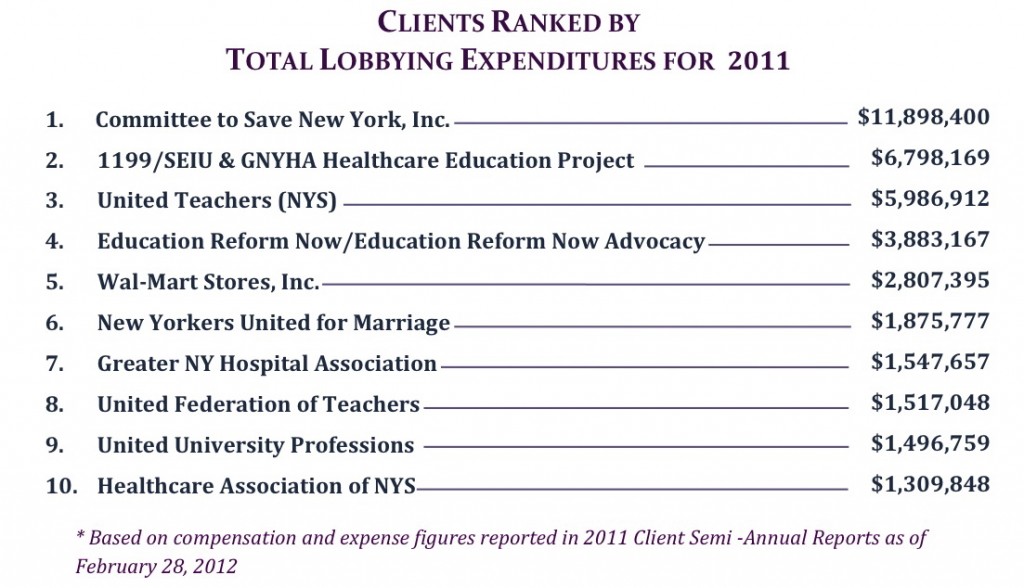
This is one of the two graphics I used in my piece from March. Note that the lead contributor, the comically named Committee to Save New York, is a consortium of real estate developers. And also note that this is only lobbying money, and does not include campaign contributions from companies or political action committees:


December 11th, 2012

The Holiday Card. With a Twist.

We are accustomed at this time of year to holiday cards finding their way to our doors and email boxes. Invariably, they present gauzy Christmas or winter themes of trees, snowfall or visions of peace.

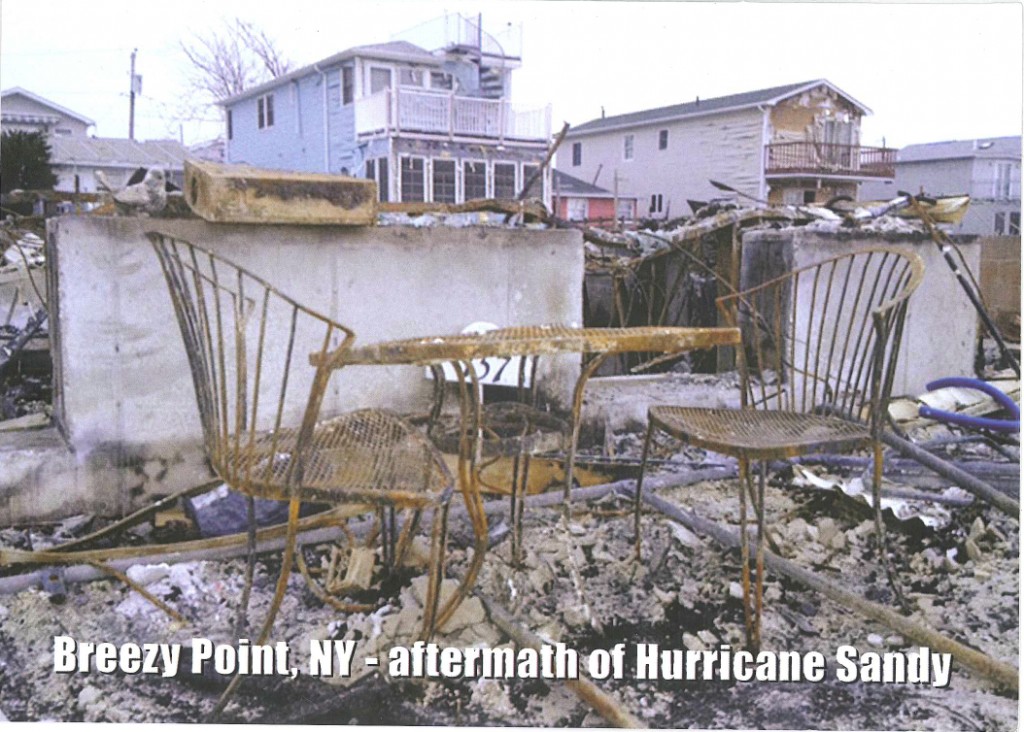
And then United Process Service sent one to me. As you can see at right, the cover of the card doesn’t present elves, sleds, stars or toys. It presents devastation from Hurricane Sandy.

This is not, quite obviously, what people expect to see in a holiday card.

Each Christmas season Above the Law has a card contest that features a variety of innovative ways for law firms to send their greetings to the world, usually in electronic form since it expands the possibilities of creativeness. They are looking for clever, for funny, for cool.

Here’s a nice selection from 2010, including an electronic twinkly one from Gordon & Rees. As the WSJ Law Blog notes, Pillsbury Winthrop did a cute little stab at legal disclaimers in 2008. You can find lots of other fun little cards on those pages, as well as in other year’s contests.

Above the Law announced yesterday its fourth iteration of the contest, with highlights of some past cards. As one of its rules, the card has to be an e-card. The United Process came to me snail mail.

So United Process is not going to win this contest with their card. Nor do I think they were trying. Nor do I think they care. That hardly seems to be the point. It is not funny, or clever, or cool. It fails every test of what a holiday card should be.

But sometimes a card comes along and clubs you over the head and says, in polite terms, “Go count your blessings, dammit.” This is that card.

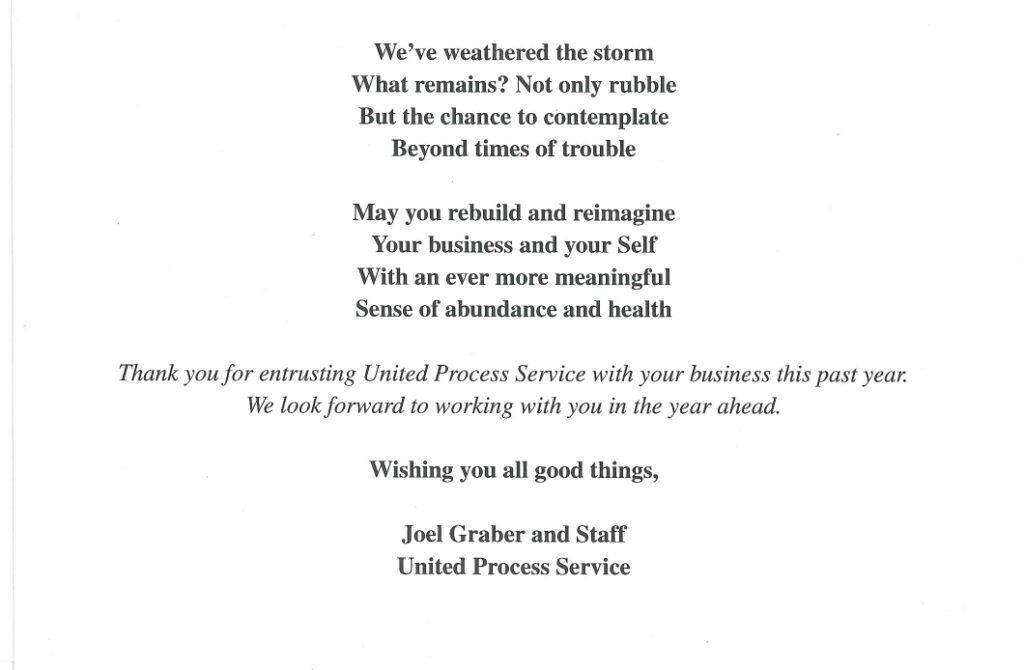
And this is the greeting on the inside — it will not win any awards for prose, but it makes its point crystal clear:


December 6th, 2012

The Subway Pusher and Media Hypocrisy

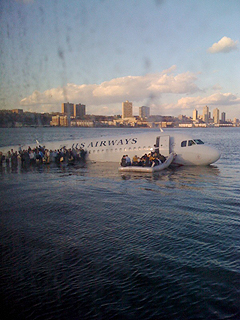
Photo by Janis Krums, used without permission under doctrine of Fair Use.

In January 2009 when Chesley “Sully” Sullenberger splash landed a plane in the Hudson, the first picture to emerge was placed on Twitter. The photo was shot by Janis Krums, who was on a ferry that was first to reach the downed plane. At the time it was taken, neither he, nor anyone else, knew what kind of tragedy might await the passengers. Passengers stood on the wing with the icy waters beneath them.

Krums tweeted at the time:

“There’s a plane in the Hudson. I’m on the ferry going to pick up the people. Crazy.”

The WSJ wrote of the photographer, “Notch another win for citizen journalism,” and the Daily News called his 15 seconds of fame “well-deserved.”

Fast forward to this past week and another photo taken amidst a potential tragedy. Ki Suk Han was pushed onto the subway tracks as a train approached.  R. Umar Abbasi snapped a picture of Han before he was hit by the train and killed, which the NY Post put on the front page. Because that is what the Post does.
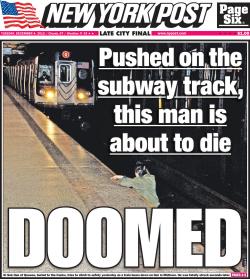
In contrast to the Twittering Krums, Abbasi said that that he ran as fast as he could toward him, snapping photos with his arm extended,  partly to signal with his flash to the driver and partly because he thought whatever photos he could manage might help police later on. He didn’t bother with the viewfinder.

Two pictures taken at two different events that could have turned tragic at the time the photo was taken. You would think that the photographers would be treated the same, right?

Actually, no, they shouldn’t be treated the same. Krums not only took the picture, but then went to Twitter and knocked out a tweet while a tragedy was potentially unfolding in front of him. At the time, I wrote:

Why, on godsgreenearth anyone would think this is a “well-deserved” “win” of any kind and relevant to any serious issue of news reporting is beyond me. Why would it matter that someone twittered about a loaded airplane going down in full view of thousands of people on the edge of the biggest city in the country — other than to the guy who took the picture and spent his time twittering it to friends? Did Twittering save lives? Of course not. Rescue was already in progress.

While Krums was being lauded as a celebrity, I wanted to know why the hell he was spending time on his iPhone instead of asking the crew what he could do to help, getting life vests ready to toss overboard, looking for survivors in the frigid waters, and looking around to see where, if at all, there might be lifeboats that he might need to assist with. Obsessiveness to technology can also mean the difference between life and death.

But it was Abbasi, not Krums, who was vilified.

Al Roker said on The Today Show:

“I’m sorry, somebody’s on the tracks, that’s not going to help,” he said during the segment. “Try to get them off the tracks,” he added, a hint of disgust in his voice.

From James King in the Village Voice:

The Post just happened to have a photographer at the same subway stop at the exact moment when the man — identified as 58-year-old Ki Suk Han, a Queens father and husband — was pushed to his death.

The photog, Umar Abbasi, opted to help Suk Han escape a certain death in a rather unconventional way: by snapping photos as the train was barreling down on him.

And John Cook From Gawker (re-pub in Slate)

“amazing Post photog R Umar Abbasi took a focused composed pic of man abt to die on subway even tho he says he was just using flash to warn.”

Those are a few I found in 10 minutes of looking; there are more.

But the question that the media, and media critics, need to ask is this: Why are these two photographers treated differently in the public eye? Why was Krums given a free pass when so many jumped to conclusions about Abbati?

There is something very wrong with this picture.


December 6th, 2012

An Open Letter to Gov. Cuomo On Filling Two Court of Appeals Seats

Gov. Cuomo:

You now have two spots to fill on New York’s Court of Appeals, as a result of the retirement of Judge Carmen Ciparick at the end of this year and the untimely death of Judge Theodore Jones last month.

There is now a list available of seven candidates for the first slot, that of Judge Ciparick.

It isn’t my intention to parse that list here, or the next list that comes out with respect to the late Judge Jones. Rather, it is to remind you that New York has a long tradition of elevating practicing lawyers, and judges that used to be practicing lawyers, to high positions.

While this would seem to be pretty obvious — who but a practicing lawyer could appreciate much of the procedural nuance and nonsense that takes place — it bears repeating due to the stark contrast with the US Supreme Court and the national political stage.

Back in 2009 President Obama needed to fill the seat vacated by Judge Souter. Before he selected Sonia Sotomayor, I wrote about the need for having lawyers who had once practiced in the private sector up on the bench. I called that The Tissue Box Test, based on lawyers knowing what it is like to have sobbing clients in the office, and trying to deal with the legal issues that brought them  there.

I urge you to read it.

But if you don’t want to click that link, this is snippet:

I want a nominee to know what it’s like to see real people — not political philosophies or corporate giants trying to add a few cents per share to their earnings — in their office in distress, and to represent them. I want a nominee that has experienced being the last, best hope for a downtrodden individual and the problem brought in the door. I want someone who knows what it’s like to be the underdog against corporate or government interests.

There is more at the link, and what I wrote back then still holds true today. It isn’t just political philosophy that is important, but having a true appreciation for the problems of desperate individuals trying to obtain a small bit of justice.

I hope that, as analysis of the judicial list goes on, that these will be considerations. For all of the judicial philosophizing in the world won’t make up for decisions that treat people as merely “interesting issues.”

In other words, beware those with a lifetime in academia. Beware those that never ran an office, worked on behalf of individuals or made a payroll. Beware those who have not had one-on-one dealings with those frantic for legal service.

And look for those that kept a box of tissues on their desks to hand to the clients in need.

Respectfully  yours,

–Eric Turkewitz


December 5th, 2012

How Not To Ask A Question

Digging through an old file on a settled case, I came across some notes that I made during a deposition I was defending. It was a simple hit in the rear auto case and I jotted down some of the questions the defense lawyer asked.

Each question, it seemed, was more wretched than the next. None were spoken in plain English:

What were the points of impact between your vehicle and the adverse vehicle?

Were there any traffic control devices?

Did  you notice blood on your person?

Did you get out of the vehicle yourself or did you get out with assistance?

What was the nature of your conversation?

The worst part about these questions, I think, is that the lawyer was working from a script.

I’m fairly confident that any 10-year-old could ask better questions. All you really need, to get this type of basic information, is natural human curiosity to find out what happened. It was the tortured attempt to sound like a lawyer that made me laugh to myself and take notes.

I was reminded of those notes yesterday when I read Bryan Garner’s blog post:  Is there ever a good reason to use “hereby” in your writing?

It isn’t really hard to abuse the English language. All you need to do is go to law school.

Perhaps some young lawyers out there will recognize themselves as they struggle to ask deposition or trial questions.