February 18th, 2021

Rochester Slammed by Judge for Demanding In-Person Hearings

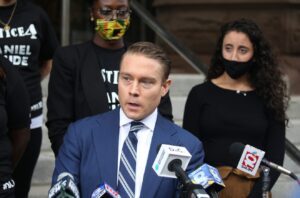
Elliot Shields of the Roth & Roth firm. Photo by Rochester Democrat and Chronicle

The City of Rochester was slammed yesterday by a New York Supreme Court justice for demanding in-person hearings in police brutality cases. And the order was so wide-sweeping that it extended well beyond the police cases at issue to all matters that the City’s Law Department was defending.

The issue arose out of summer protests surrounding the death of George Floyd, as well as Daniel Prude, a Black 41-year-old who died last March 23rd after being physically bound by Rochester police officers. The police department then engaged in brutal crackdowns against the protesters.

Over 100 people filed Notices of Claim against the police department, a required precursor in New York to bringing suit against a municipality. The City, in turn, then gets an opportunity for a hearing where it takes testimony from the claimant. Such hearings, colloquially known as 50-h hearings after the authorizing statute, are akin to a deposition.

But the City of Rochester’s Law Department demanded that each claimant appear in person for those 50-h hearings, rather than doing them virtually by teleconference. As regular readers know, judges in New York from the outset of the pandemic have forced lawyers to take testimony virtually, refusing to allow matters to be stalled until the pandemic was over. Administrative orders from the courts have since followed.

There was no apparent justification for demanding hearings this way.

Notwithstanding these pandemic related changes, hearings had been attempted in an unrelated hearing effort to move the matters. But during one, Municipal Attorney John Campolieto was unwilling, or incapable, of wearing a mask properly, according to the suit that was filed, and it was held in a small room. Campolieto subsequently tested positive for COVID.

The action was brought by the New York City firm of Roth & Roth, which filed 115 claims regarding abuse by the police related to the protests, and was noticed for numerous in-person hearings. (As per my conversation with partner David Roth.) The well-being of their attorneys were likewise at risk in being forced to in-person hearings. This included Roth & Roth associate Elliot Shields, a Rochester native who maintains connections with the City, who had appeared at earlier hearings and depositions with Campolieto.

Bringing suit in their own name against the head of the Law Department, the firm asserted that demanding in-person hearings during an uncontrolled pandemic was “designed to gain a strategic advantage.” And it was being done despite the fact that the City’s Law Department had just had a COVID outbreak.

Justice Ann Marie Taddedo agreed, and wrote in a decision that the City’s conduct was “arbitrary and capricious” in demanding in-person hearings. But Justice Taddedo went well beyond the confines of this case.

The order was exceptionally wide, encompassing not only these police brutality lawsuits, but all 50-h pre-suit hearings by the City, regardless of whether they are related to these police brutality claims or not.

And still worse yet for the Law Department, an apparently furious judge made the order so broad it encompasses all depositions in all cases for which the City of Rochester is a party.

This decision stays in effect until the emergency declared due to the pandemic is lifted.

The Law Department of the City of Rochester has, in my opinion, really screwed the pooch and done an extraordinary disservice to the citizens of Rochester. With this decision, every judge that comes across the City in litigation in any case will severely question the basis of any request they make, far more so than they might ordinarily. I don’t know what kind of reputation Rochester’s City attorneys had before, but it is most surely in the crapper now.

Whoever made this dangerous and bone-headed decision should be fired.

—————- The relevant documents below——

 

February 16th, 2021

A Year of COVID – And 3 Litigation Changes

You know what this is

It’s been a year since I last set foot in a real courthouse. I appeared for jury selection in a Bronx nursing malpractice case in mid-February. Some money was on the table, but I was pushing for better.

But the news. In the news was the virus. It wasn’t here yet. As far as we knew. But it was coming. And when it came it would come hard, and the world was going to be shut down.

It could be days wasted up in the Bronx waiting for a jury room. More days wasted waiting for a judge assignment after that. If I picked that jury, my gut told me I would never make it to verdict. And then what? How long would it be before my client had another chance?

The client approved of settlement, and I beat a hasty retreat from the courthouse.

It was an unseasonably warm day for February in New York, but I put on my regular winter gloves anyway as I rode the subway out of the Yankee Stadium station near the courthouse. No one, after all, was sure exactly how the virus was transmitted. I touched nothing. The virus was novel.

And a few weeks later news helicopters spun over head as my home was in the bulls eye of the first East Coast Containment Zone. The virus, of course, was not contained. (See: Greetings from the Containment Zone)

What did we learn over the past year? A lot. But I’ll only cover changes to the litigation system. ‘Cause that’s what you came for.

Here we go with three critical changes; the first two have already been implemented (will they continue when it’s over?), and the third will relieve the mammoth courthouse backlog caused by the virus. Given that they collectively change the way litigation has been done for the last 200 years, I would call it significant:

Many Courthouse Conferences Waste Time: Anyone that’s been to the high volume parts of New York City’s courts knows this problem. Hundreds of cases may be on a calendar call. Oft times, if you part of this cattle call, you are just given a new date a few months away. Lawyers gotta schlep to the courthouse for this?

If the case is still in discovery, most issues are resolved by counsel in the hallways. If you have a real issue, you wait (and wait, and wait) for a conferences that takes 5 minutes when you get your turn at the bench. But those five minutes might consume an entire morning of travel, waiting, more waiting, discussion and then travel again. It’s been this way since forever. (See: How One Brooklyn Courtroom Wastes $10M per Year)

On March 13th of last year, at the directive of New York’s Chief Administrative Judge, Lawrence K. Marks, virtual conferences were put in motion in order to reduce foot traffic in the courthouse. (See, Will Coronavirus Push New York’s Courts Out of the Colonial Era?)

Lawyers will now often “meet and confer” to iron out discovery issues without conferences. Sadly, it was not habit before because one side of the equation gets paid by the hour. But now only real problems are likely to see a judge or law secretary (virtually).

For routine conferences this has worked very well, and I hope our judiciary continues this pattern after the pandemic is over. (And it will be over one day. I think it will, I think it will, I think it will.)

Put on a suit, spend 10 minutes in front of the computer, and done. No need to blow half a day for minor discovery issues.

Virtual Depositions Work: While some defense lawyers tried to use the pandemic as an excuse to delay (“We need to see the witnesses face to face!”) that door was firmly slammed shut by the courts. Depositions proceeded virtually. (See: New York Judges Order Virtual Depositions Due to COVID-19)

And you know what? They have worked just fine. I’ve heard few complaints from attorneys on either side. And if you want to be in the room with your own client, have at it. But there’s no need for others to be there if they don’t want to for health reasons, or for mere convenience. There’s no reason I shouldn’t be able to take the deposition of someone in Albany or Buffalo while sitting in my office if I so choose. Pandemic or not.

And if anyone thinks they need to see the reactions of the of the witnesses better, they can always record them. This, of course, is not new. We have had this option for many, many years, but it is very much the exception when done, not the rule.

A bad faith law is needed to move cases: Cases won’t settle without a jury. We knew this before, of course, but it really comes home now. Without the threat of a jury in the box the incentive to settle evaporated for liability insurers, even on clear-cut matters. Worse yet, can now offer even fewer pennies on the dollar if the injured plaintiff was in additional financial distress (and potentially leaning on tax-funded safety net programs to get by).

Insurers have no down side in delay, delay, delay. They just keep the premiums (nicely invested thank you very much) while postponing the benefits. The pandemic is a sweet deal for them, while the victims (and tax-payers) suffer the costs.

And now with the resulting mammoth backlog in the courts due to unresolved cases, and then topped off with cutbacks in the courts due to statewide financial shortfalls (older judges no longer getting certified), there are years of waiting ahead.

But with a good bad faith law, this problem vanishes. Hang the Sword of Damocles over the heads of the insurers and watch their profitable recalcitrance vanish. (See, Why Can’t New York be Like Alabama)

There’s no excuse for New York not having a bad faith law with real teeth, as it has real benefits: Victims get justice, the overwhelmed court budgets get relief, there is less need for tax-payers to fund the costs of the injuries, and the insurance companies merely must do what they were always required to do (but never forced to do).

So there you have it, two very significant changes in the way law has been practiced the last couple hundred years, that we should keep on doing. And one legislative proposal to make the wheels of justice roll efficiently.

The pandemic has caused extraordinary heartbreak in a wide array of areas. We have adapted somewhat to it — and along with you I can’t wait to burn those masks. But some adaptions are worth keeping, and one legislative change is long overdue.